
Why Some Utah Homes Sit While Others Still Sell Fast in 2026
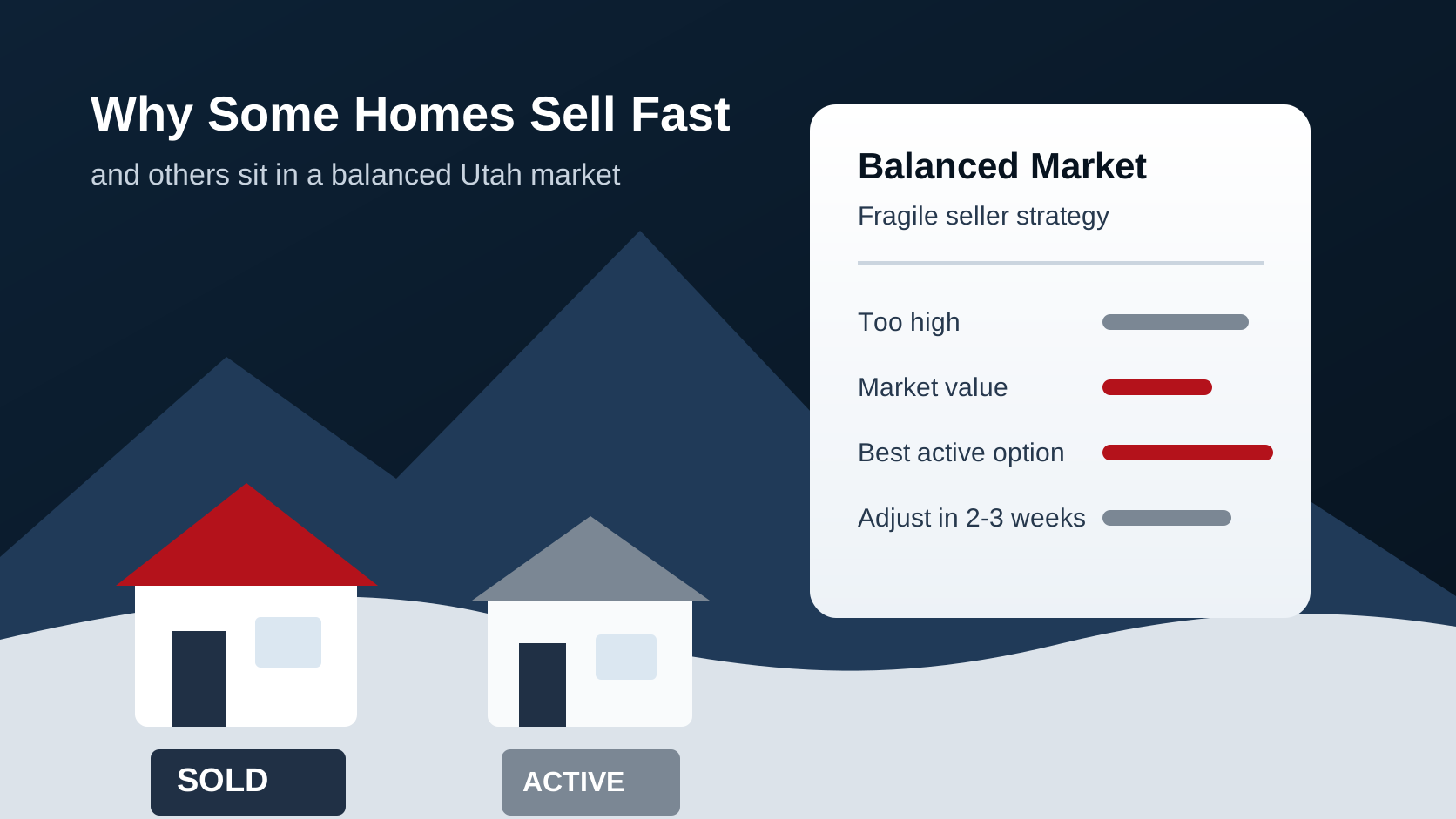
In a balanced Utah market, a seller's strategy is fragile. Price a little too high and you may get few showings; price at market value, launch well, and respond quickly to feedback, and the home can still sell.
The short answer
Utah’s market is not bad for sellers, but it is less forgiving than the market sellers got used to a few years ago. It feels balanced: not a clear buyer’s market, not the kind of seller’s market where almost anything sells immediately.
That makes the listing strategy fragile. If a home launches a little too high, it may get very few showings. If it launches at market value or slightly under the best comparable homes, it can still move.
The sellers who win are not guessing. They are reading the market from day one.
Balanced does not mean easy
A balanced market still rewards the best-positioned homes.
In a strong seller’s market, a listing can survive sloppy pricing because buyer demand covers the mistake. In a buyer’s market, almost every seller feels pressure. A balanced market is trickier because both things can be true at once: good listings sell, and weak listings sit.
That is what makes the current Utah market feel confusing. A seller may see a neighbor go under contract quickly, then watch another similar home sit for 45 days. The difference is often not the city. It is the strategy.
Recent April 2026 market updates show this pattern across the Wasatch Front. Lehi homes were selling at about 100% of asking on average, while Orem was closer to 98.9% and Riverton was about 98.94%. Those numbers are not panic numbers. But they also do not leave room for unrealistic pricing.
The first two weeks tell you a lot
The market starts giving feedback as soon as the listing goes live.
The most important signals are:
- How many showings you get in the first week
- Whether buyers come back for second showings
- What agents say after showings
- Whether buyers are comparing your home to newer, cleaner, cheaper, or better-located options
- Whether any offers arrive, even if they are below list price
Low showings usually means the price, photos, location, or property type is not compelling enough to pull buyers away from competing listings. Showings with no offers usually means buyers like enough to look, but something inside the home is losing against the alternatives.
The mistake is waiting too long to interpret that feedback. If the first two weeks are quiet, the market is telling you something.
You are competing against active homes, not just sold comps
Sold comps tell you where the market has been. Active listings tell you what buyers can choose instead of you.
Sellers often anchor to recent sales in their neighborhood, which matters, but buyers rarely shop that narrowly. A buyer looking at Orem might also consider Pleasant Grove, American Fork, Provo, Lehi, or Saratoga Springs depending on commute, schools, price, and home size.
That means your home has to be the best option for a specific buyer, not just a reasonable option in your subdivision.
Before listing, ask:
- Who is the most likely buyer for this home?
- What else can that buyer buy within 10 to 20 minutes?
- Are we bigger, cleaner, newer, better located, or better priced?
- If not, why would they choose us?
That question matters more now because buyers have enough inventory to compare. Even a well-priced home can sit if another active home is a cleaner fit for the same buyer.
Pricing slightly high can be enough to miss the market
In this kind of market, overpricing does not have to be dramatic to hurt.
A seller may think, “Let’s try $20,000 high and see what happens.” Sometimes that works. But when buyers are payment-sensitive, that small difference can move the home outside a saved search, make the monthly payment feel wrong, or cause the listing to look weaker next to a cleaner competitor.
The risk is not just price. It is momentum.
The first week is when a listing gets its cleanest attention. If the home launches too high, the best buyers may skip it. By the time the seller adjusts, the listing can feel stale, even if the new price is reasonable.
That is why I would rather launch at the right number than use the first month to prove the wrong number was too high.
Price adjustments should be planned before you list
A good listing strategy includes the adjustment plan before the sign goes in the yard.
That does not mean every home needs a price cut. It means the seller and agent should agree on the rules ahead of time:
- If we get strong showings and no offers, what feedback would trigger a change?
- If we get weak showings, how quickly do we adjust?
- If two competing homes reduce price, do we respond?
- If we are still active after two or three weeks, what is the next move?
In a balanced market, reviewing every week is normal. If the data is weak, a price adjustment every two to three weeks is often better than waiting 45 or 60 days and chasing the market from behind.
The key is not to reduce randomly. The key is to listen to what the market is saying.
Presentation matters more when buyers have choices
When there are more homes on the market, buyers become less forgiving.
That does not mean every seller needs a full remodel. Most sellers need the basics done well:
- Clean the house deeply
- Make the yard look maintained
- Touch up obvious scuffs and small repairs
- Make carpet and floors look as good as possible
- Use professional photos
- Add light staging where rooms feel empty or hard to understand
- Remove enough personal clutter that buyers can see the space
Vacant homes especially need help. Empty rooms can look smaller online and colder in person. Even light staging can help buyers understand furniture placement and room function.
The goal is not to make the home look fake. The goal is to make it easy for the right buyer to say yes.
Fast-selling homes usually do three things well
The homes that still sell quickly usually have a clean combination of price, presentation, and launch.
They are not always the cheapest homes. They are the homes that make sense immediately when a buyer compares options.
A strong launch usually includes:
- Pricing against both sold comps and active competition
- Professional photos and clean online presentation
- Clear showing access during the first week
- Agent outreach to likely buyer agents
- A plan for reviewing feedback immediately
- A seller who is willing to adjust if the market does not respond
This is where a good agent earns their fee. The job is not just putting the home on the MLS. The job is helping the seller read the market accurately and respond before momentum is gone.
The seller’s mindset has to change
The sellers who struggle right now are often still pricing emotionally.
They remember the market where buyers stretched, waived things, and competed hard for almost any decent listing. That market trained sellers to think the market would come to them.
The current market is different. Buyers are still buying, but they are comparing harder. Higher payments make them more selective. If a home is overpriced, poorly presented, hard to show, or weaker than the competition, buyers do not have to force it.
That is not a reason to panic. It is a reason to be precise.
When to call a real estate agent
Call before you pick the list price.
The most expensive pricing mistakes usually happen before the home ever hits the market. A good pre-list strategy should answer three questions clearly:
- What is the real market value?
- Who is the most likely buyer?
- What do we do if the market does not respond in the first two weeks?
If you are thinking about selling in Utah County or Salt Lake County, get in touch. I can help you compare your home against both sold comps and current competition so the launch strategy is clear before you go live.